Here’s what nobody talks about: if you’re still manually prompting AI for each piece of content, you haven’t actually solved your content creation problem.
You’ve just made yourself a faster content hamster.
I see this constantly with the coaches and creators I work with. They’re excited because they can now write a blog post in 20 minutes instead of 2 hours. But they’re still the one writing every prompt, editing every output, and managing every moving part.
That’s not freedom—that’s just optimized labor.
Manual prompting keeps you trapped in the content creation process. Real AI content freedom comes from training autonomous agents that run your entire content system in the background while you focus on your core business.
But here’s what most people miss:
The “time savings” from prompting actually creates more work through constant editing and quality control
You’re still the bottleneck in your content system—everything stops when you stop
Most people mistake faster execution for actual automation (they’re completely different)
After running a two-person multi-six-figure business where I haven’t manually created content in months, I’ve learned that the gap between “AI helper” and “AI team member” is where real business transformation happens.
The Hidden Labor Trap in Manual AI Prompting
When you’re prompting AI manually, you become a full-time content manager without realizing it. Every day, you’re:
Thinking up content ideas and angles
Crafting the perfect prompt for each piece
Reviewing and editing AI prompting outputs to match your voice
Reformatting content for different platforms
Managing the entire workflow from start to finish
This is what I call “invisible labor”—it feels productive because you’re moving fast, but you’re still doing all the cognitive heavy lifting.
You’re not creating content faster; you’re just working harder at a slightly accelerated pace.
The real problem?
You’re still the single point of failure in your content system. Miss a day, go on vacation, or focus on client work, and your content pipeline stops completely.
What a Background Content Team Actually Looks Like
Think of AI differently. Instead of a tool you operate, imagine it as a trainable team member—or better yet, a whole crew of specialists working in the background.
In my business, I’ve built what I call a “content ecosystem” of trained agents. Here’s how it actually works:
Agent #1: The Voice Processor
Takes my raw voice notes (usually 2-3 minutes of me talking through an idea) and creates structured content outlines that capture my thinking patterns and natural speech.
Agent #2: The Content Creator
Transforms those outlines into full-length pieces using my established voice patterns, messaging frameworks, and storytelling style.
It knows my preferred analogies, how I explain complex concepts, and even my particular way of addressing objections.
Agent #3: The Platform Adapter
Takes that core content and reformats it for different platforms—adjusting tone for LinkedIn vs. Instagram, creating email-friendly versions, pulling quote-worthy snippets for social media.
Agent #4: The Quality Controller
Reviews everything against my brand voice guide and messaging standards before anything goes live.
It catches inconsistencies, flags content that doesn’t sound like me, and ensures brand alignment.
The key difference?
These agents work independently. I record one voice note on Monday, and by Friday, I have a week’s worth of platform-specific content ready to publish.
I don’t touch the process—it runs like clockwork.
The Real Difference: Automation vs. Optimization
Most people are optimizing their manual process when they should be automating it entirely.
Optimization thinking:
“How can I write better prompts to get better outputs faster?”
Automation thinking:
“How can I train systems to handle this entire process without me?”
The mindset shift changes everything. Instead of becoming a better AI operator, you become an AI trainer. Instead of saving time on content creation, you eliminate yourself from content creation.
Building Your Invisible Content Team
Creating this kind of background system requires a different approach than standard prompting. You’re not just giving AI instructions—you’re training it to think and create like you.
Step 1: Voice Pattern Training
I spent weeks feeding my AI agents examples of my best content, not just for style, but for thinking patterns.
How do I approach problems? What stories do I tell? How do I structure explanations? This goes way deeper than “write in a conversational tone.”
Step 2: Context Persistence
Each agent maintains context about my business, my audience, my messaging framework, and my content goals.
They don’t start from scratch with each interaction—they build on accumulated knowledge about what works for my brand.
Step 3: Quality Standards Integration
I’ve trained quality checkpoints into the system. The agents know what “sounds like me” means and can self-correct when content drifts off-brand.
This eliminates the endless editing cycle that keeps most people trapped.
Step 4: Workflow Automation
The agents hand content off to each other in sequence. Voice note goes to Agent #1, output goes to Agent #2, and so on. I’m not managing the workflow—the system manages itself.
Why This Isn’t Just “Better AI Prompting”
Traditional AI prompting keeps you in the driver’s seat.
You’re still making every decision, crafting every request, and managing every output. Agent-based systems put you in the CEO seat—you set the direction and standards, then step back while your team executes.
The practical difference shows up in your daily reality.
Instead of spending 30 minutes each morning writing prompts and editing outputs, I spend 5 minutes recording a voice note about what’s on my mind. The content ecosystem handles everything else.
What most people experience with manual prompting:
20-30 minutes per piece of content (including editing)
Constant quality control and voice matching
Daily content management tasks
Content pipeline stops when you stop
What I experience with trained agents:
5 minutes of input creates a week of content
Consistent voice and quality without editing
Content runs automatically in the background
Business continues growing when I’m not actively creating
The Compound Effect of True Content Automation
When you’re not spending mental energy on content creation, you can focus entirely on the activities that actually grow your business: client delivery, relationship building, strategic planning, product development.
For my business, this shift meant going from “content creator who also coaches” to “coach who happens to have consistent content.”
The content became a background function rather than a primary time investment.
The compound effect is massive.
Not only do you get consistent content output, but you also get your cognitive capacity back for higher-value activities.
Content becomes a business asset that appreciates over time rather than a daily labor requirement.
The Hidden Success Metric
Here’s the real test of whether you’ve built effective content automation: Can you go on a two-week vacation without your content pipeline stopping?
If you’re still manually prompting, the answer is no. Your content dies when you step away.
If you’ve built trained agent systems, your content continues running, your audience keeps getting value, and your business keeps growing even when you’re completely disconnected.
That’s the difference between AI optimization and AI automation.
One makes you a faster content creator. The other eliminates you from content creation entirely.
Moving Beyond the AI Prompting Paradigm
The coaches and creators I work with who make this transition describe it as business-changing, not just time-saving. They’re not just creating content faster—they’ve removed content creation as a constraint on their business growth.
The technical setup requires initial investment. Training agents properly takes time, iteration, and a deep understanding of your own voice and messaging. But once it’s running, you have something most solo entrepreneurs never get: a content team that works 24/7, never takes sick days, and never drifts off-brand.
If you’re ready to stop being a content creator and start being a business owner with automated content systems, the technology and frameworks exist today.
The question isn’t whether it’s possible—it’s whether you’re ready to think beyond prompting and start building systems that truly replace you in the process.
This content system is already running in my business and helping other coaches build their own invisible content teams.
The future of AI content isn’t better AI prompting—it’s trained systems that work in the background while you focus on what actually grows your business.
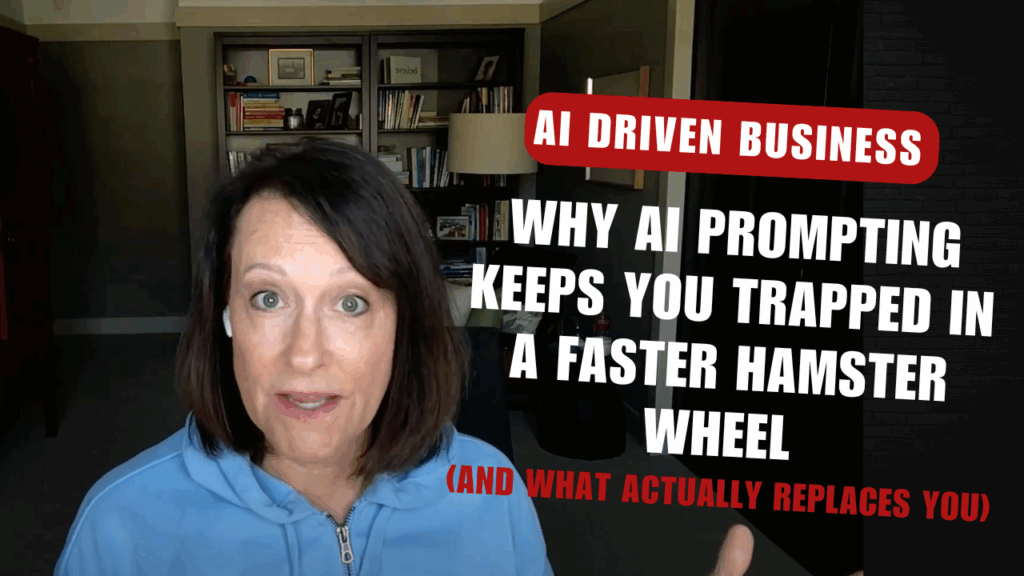
Watch Me Talk About Better AI Prompting Here: