
Key Takeaways
AI agent vs skill vs prompt comes down to two questions you can answer in thirty seconds.
How often does it happen? Once in a while means it stays a prompt and you build nothing at all.
Does it have to start without you? If you are happy to kick it off, it is a skill. If it has to run while you are asleep, it is an agent.
Most of the work coaches, consultants and course creators want to automate is skill work, not agent work.
Build the smallest thing that solves the problem. I have built hundreds of these and I run about eight in a normal week.
I had forty-something skills built, four AI teams, whole systems ready to go, and for months my content still was not getting posted.
Not because the builds were bad. Because I had forty things built and nothing deciding what to run. That decision was still happening in my head every time I sat down, so on a busy day I did it by hand like I always had.
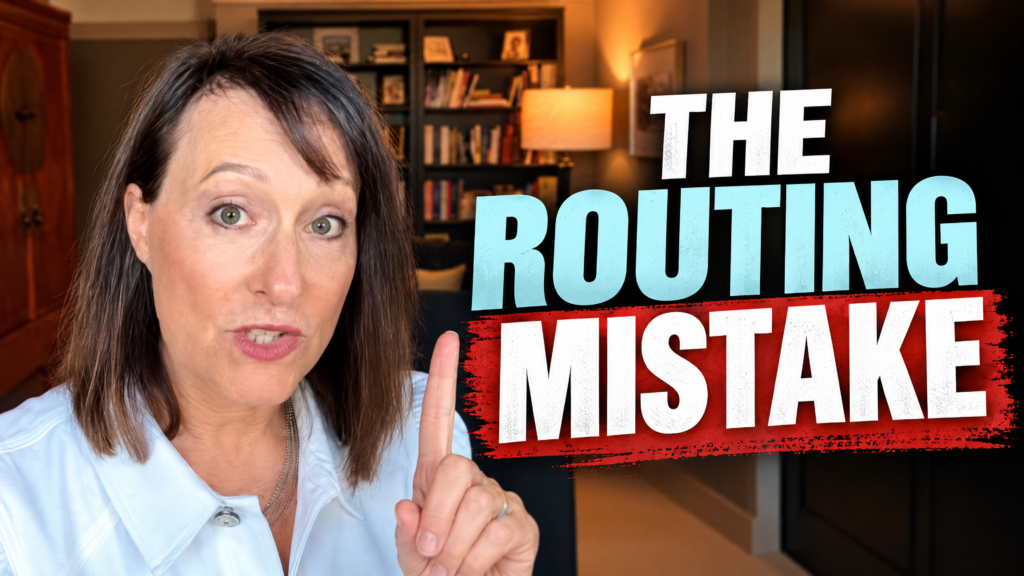
I wrote this in my notes a while back and it is the truest thing I have written all year. You do not have an agent problem. You have a routing problem.
Which is why the question everybody is asking — agent, skill or prompt — matters less than the order you answer it in. Two questions, thirty seconds, and you will know what to build and what to leave alone.
had forty-something skills built, four AI teams, whole systems ready to go, and for months my content still was not getting posted.
Not because the builds were bad. Because I had forty things built and nothing deciding what to run. That decision was still happening in my head every time I sat down, so on a busy day I did it by hand like I always had.
I wrote this in my notes a while back and it is the truest thing I have written all year. You do not have an agent problem. You have a routing problem.
Which is why the question everybody is asking, agent or skill or prompt, matters less than the order you answer it in. Two questions, thirty seconds, and you will know what to build and what to leave alone.
The Two Questions That Settle AI Agent vs Skill vs Prompt
Two questions tell you which one you are building. How often does this happen, and does it have to start without you? That is the whole decision.
If the answer to the first one is once in a while, a few times a year, or whenever a certain kind of client shows up, you are done. That is a prompt. You keep it somewhere and pull it out when you need it. You do not build anything.
If it happens every week, or every time you publish something, go to question two. And be honest on this one. Not would it be nice if it started without me. Does it have to? If you are the one who kicks it off, that is a skill, every single time. If it has to watch for something, or run on a schedule whether or not you remember, now you are talking about an agent.
Notice how the questions are stacked. That is on purpose. The first one gets you out of building anything at all. The second one keeps you in the cheap lane as long as possible.
Most people run this backward. They start with what is the most impressive thing I could build, then work backward to justify it. I have done it, and I have wasted whole weekends doing it. A lot of you will run these two questions and land on building nothing this month, and that is a good outcome, not a failure.
Not Everything Needs to Be an Agent, and a Prompt Still Counts
A prompt is the right answer far more often than the internet is telling you, and nobody selling AI training wants to say that out loud.
Here is the test. If it comes up every now and then, and there is no real standard it has to hit, you will read the output and know whether it is right. You paste it in, you get your answer, you tweak it a little, you close the tab. Nothing to maintain. Nothing to fix six months from now when you cannot remember how you set it up.
Real ones out of my own week. I needed ten title options for a video. Prompt, and there is no version of that I need saved anywhere. A contract comes over and I want to know what to ask before I sign it, which happens about four times a year. Prompt. A one-off email to someone I met at an event. Prompt.
None of that needs a system. It needs a chat window, a little context from you, and about four minutes.
I want to say this plainly, because I think a lot of you feel guilty about it. I did. If you ran the two questions and landed on prompt, you are not behind. You did not fail some AI test. You saved yourself a Saturday building something you were never going to open again. Prompts are still important. They are not the consolation prize.
Why a Skill Is Where Most of Your Business Actually Lives
A skill is for work that happens the same way every time and has to meet your standard. Read that twice, because there are two halves and both of them matter.
Same way every time means the shape does not change. The steps run in the same order whether it is January or July. Has to meet your standard means it needs to know your business, your format, your voice, the way you always structure a client email, the three things you never let go out without checking.
That second half is why a prompt is not enough here. With a prompt you re-explain your standard every time. Your colours, your tone, the words you never use. You type the same context into a fresh chat window, or you have it scattered across a dozen projects and cannot tell which one is current. That is exhausting, and eventually the output stops sounding like you.
A skill holds it for you. You build it once, your standards live in one central place outside of it, and the skill knows where to go get them and what to do with them. Then you trigger it whenever you want.
Mine, so this stops being abstract. One writes my hooks and captions for short-form video. It knows my frameworks, it knows how I sound, I give it the topic and it goes. One takes a video transcript and builds an eight-slide carousel, then a second one pushes it into my Canva template so I am not copying and pasting. One takes any script and puts it on a page I can read from while I am filming.
Every one of those happens over and over, has to sound like me, and I am happy to be the one who starts it. Skill, all day long.
When Work Has Earned an Agent
An agent is for one thing. Work that has to start without you. It watches for something, or it runs on a schedule.
I use them, and they hold up real parts of my business. My content repurposing team watches a folder for a transcript. When one lands, four skills underneath the agent go to work, whether or not I remember. Every client call I get is recorded, written up and filed in the right client folder while I am on a plane or asleep. Something watches invoice dates, because I am never going to be the person who remembers on the right date. Something reads my numbers at month end, so I hear about a problem from my own dashboard instead of from a client.
Notice how unglamorous all of that is. Agents are for the work that fails because you forgot.
The trap is not that agents are wrong. It is that people build one before the work underneath it is sorted out. Here is the rule I do not break. The system comes first, and the agent’s job is to serve the system. If you cannot describe the steps to another human being, you are not ready to hand it to an agent. A broken process running automatically is worse than a broken process running slowly, because now it is broken faster and nobody is watching.
One client of mine writes four emails a week, so we built his email writer as a skill first. He runs it himself. Once he has tested it a few more weeks, the agent goes around it and it fires when a transcript hits the folder. That order matters, and it is the part people skip.
What To Do Next
Three moves, in this order.
Take stock before you build anything new. Your prompts are in five or ten places, there are a couple of half-finished builds, maybe a tool you paid for and forgot. Put them in one place. Most people find they already have more than they thought, and about half the overwhelm goes away right there.
Pick the one piece of work that eats the most hours and build it as a skill. Whatever you did last week that made you think, I have done this exact thing before.
Run that skill yourself for two weeks. Tweak it, test it, then let it go.
When the work truly has to start without you, put an agent around it. By then you will know it is the right one, because you will have run it by hand.
The first step today is to open your calendar, look at last week, and find the thing you did three times or more. That is your skill.
If you build three skills this month, you will get more time back than ninety percent of the people posting about this online.
You came in wondering which one to build – Agent Prompt or Skill…
You are leaving with a way to decide in thirty seconds, and permission to leave half of it as prompts.
Pick the one thing you did three times or more last week. Build it as a skill. Run it yourself for two weeks before you automate the trigger. When the work earns an agent, you will know, because you will have watched it run.
That is your whole assignment. You do not need hundreds of agents. You do not even need forty. I built hundreds and I run about eight.
Frequently Asked Questions
Q: What is the difference between an AI agent and a skill?
A: A skill is work you start yourself that runs the same way every time and has to meet your standard, like writing captions in your voice. An agent is work that has to start without you, either watching for something or running on a schedule. If you are happy to be the one who kicks it off, it is a skill.
Q: When should I use a prompt instead of building anything?
A: When the work comes up occasionally and there is no real standard it has to hit. If you can read the output and know straight away whether it is right, a prompt in a chat window is enough. Contracts a few times a year, ten title options, a one-off follow-up email.
Q: When is an AI agent actually worth building?
A: When the work fails because you forgot it. Recording and filing every client call, watching invoice dates, pulling your numbers at month end. Build the skill first, run it yourself for a couple of weeks, then wrap the agent around it once you know the steps hold.
Q: How many AI agents does a small business actually need?
A: Fewer than the internet suggests. I have forty-something things built and I use about eight in a normal week. Most people who feel behind are missing a way to decide what to run, not more things to run.
Q: What does it mean that I have a routing problem, not an agent problem?
A: It means the builds exist but the decision about which one to open is still happening in your head. On a busy day that decision loses, and you do the work by hand. Fixing routing beats building anything new.