
You’ve done everything right. ChatGPT wrote you the perfect script. Your lighting is dialed in. You know exactly what you want to say. But the second that camera turns on, something shifts. Your throat gets tight. Your voice sounds flat. You forget your lines, or worse—you stop mid-sentence because it just doesn’t feel like you.
If you’ve been struggling with how to feel confident on camera, here’s the thing: it’s not your script’s fault. It’s not even your setup. What’s actually happening is your nervous system is trying to protect you, and no AI tool on the planet can fix that for you.
The thing is:
→ AI can write brilliant scripts, but it can’t regulate your nervous system or help you feel confident on camera
→ Your audience feels your state before they process your words—tension, overthinking, and stress show up even with perfect content
→ A 2-minute pre-recording reset (breath work, grounding, intention-setting) shifts you from robotic to real
→ When you’re regulated, your natural camera confidence comes through—that’s what builds trust and connection
But here’s what most people miss:
→ They blame the content when the real issue is their physiological state
→ Pushing through camera anxiety to “just get it done” trains your body to associate filming with stress
→ The most magnetic videos often have imperfect production but grounded energy—your nervous system state trumps polish every time
What’s Really Happening When You Freeze on Camera
Let me walk you through what’s actually going on when you sit down to film and suddenly all your camera confidence disappears.
Your brain and body are wired for survival, not for the spotlight. Being seen through a lens triggers the same stress response as standing in front of a live crowd.
For some of us, our system might freeze up. For others, we go into fawn mode—trying to be overly likable or polished. Some of us just go completely blank.
This isn’t just fear of filming. It’s fear of being fully seen. And that’s deeply human.
Here’s the catch: unless you regulate before you film, your body will try to protect you by muting your message. It’ll tighten your throat, make your voice sound flat, or cause you to forget everything you practiced. And no amount of AI assistance can override that survival response.
I’ve worked with clients who tell me all the time: “I had the script. I used ChatGPT. I prepped the bullet points. But once I hit record, something felt off. I didn’t feel like myself.”
That’s not a content problem. That’s a nervous system signal. And understanding this is the first step in learning how to feel confident on camera consistently.
The Real Source of Camera Confidence (It’s Not What You Think)
Most advice about building camera confidence focuses on the wrong things. Practice more. Get better lighting. Memorize your script. Film yourself repeatedly until you get comfortable.
But here’s what that advice misses: you can practice a thousand times, and if your nervous system isn’t regulated, you’ll still feel off. Because camera confidence doesn’t come from repetition alone—it comes from feeling safe in your body while being seen.
Your audience can feel your state even if they can’t explain it. They might not consciously think, “Wow, she seems tense,” but on some level, they’re picking up on whether you feel safe in your body or not.
Energy is the invisible ingredient your audience responds to most. It’s why you can watch someone with no makeup, terrible lighting, maybe even talking from their car—and they still pull you in.
That grounded presence, that natural flow you feel when you’re just talking to a friend—that’s real camera confidence. That’s what makes people lean in.
And that only shows up when you’re safe in your body.
Think about it. You’ve probably scrolled past perfectly polished videos that just didn’t land. The lighting was great. The editing was clean. But something felt… off. Meanwhile, you’ve probably stopped scrolling for a video that was technically a mess but the person’s energy just drew you in.
That’s not magic. That’s what it looks like when someone actually feels confident on camera—not performing confidence, but genuinely grounded and present.
Why Your Perfect AI Script Still Feels Wrong
Let’s get clear on what AI can and can’t do for you when it comes to camera confidence.
AI is brilliant at helping you:
→ Generate content ideas when you’re stuck
→ Expand on concepts you’ve outlined
→ Repurpose your content across platforms
→ Draft scripts that capture your voice (if you’ve trained it right)
→ Polish your messaging and structure
But here’s what AI can’t do: It can’t fix your energy. It can’t regulate your nervous system. It can’t make you feel confident on camera.
I use AI all the time.
I love it for shaping messages and expanding ideas. But when it comes down to actually filming, I am the transition point. I can say all the right words, and yet it will feel wrong if my body isn’t on board.
The same is true for you.
You could have the most perfectly crafted AI-generated script in the world, but if you’re holding tension in your shoulders, breathing shallow, overthinking how you’ll be perceived—all of that shows up on camera.
Your audience feels it, even if they can’t name it.
This is why so many content creators struggle even after they’ve “fixed” their scripts, upgraded their equipment, and practiced their delivery.
They’re addressing surface-level issues while the real problem—an unregulated nervous system—goes untouched.
The 2-Minute Reset That Builds Real Camera Confidence
You don’t need a 20-minute meditation before you film. You don’t need to spend an hour “getting in the zone.” You just need a 2-minute reset that tells your nervous system: we’re safe, we’re grounded, we’re ready.
Here’s what I do before I film, and what I teach my clients to help them feel confident on camera every single time:
Get comfortable. Place your feet flat on the floor. Feel the ground beneath you. This simple act of physical grounding sends a signal to your nervous system that you’re stable and supported.
Take three slow breaths into your body. Not shallow chest breaths—deep belly breaths that actually move through your system. This activates your parasympathetic nervous system, which is your body’s natural calm-down mechanism.
Move your body for 30 seconds. Stand up, shake it out gently, roll your shoulders. Physical movement helps discharge any built-up tension or stress energy.
Place a hand on your heart. This simple touch point is incredibly regulating. It’s a gesture of self-compassion that your nervous system recognizes.
Ask yourself: “How would I say this to someone I care about?”
Not “How do I perform this for the camera?” But genuinely—how would you explain this to your favorite client, your best friend, someone you love? That shift in perspective changes everything about your camera presence.
Then, and only then, open your AI tool to refine what you already feel clear about. Or if you’ve already got your script ready, turn on that camera and start filming. This is the sweet spot where preparation meets presence.
From Camera Anxiety to Camera Confidence: What Actually Shifts
When you film from a regulated state, everything changes. Your voice has natural inflection. Your facial expressions are authentic.
You remember your points without sounding like you’re reciting them.
You might even riff on your script in the moment because you’re present enough to respond to what’s coming through.
People can feel the difference.
They can feel when you’re tight, looking down, second-guessing yourself. And they can feel when you’re grounded, present, and speaking from a place of safety.
That regulated energy is what builds genuine camera confidence.
It’s what makes someone watch your video all the way through, comment, share it, or reach out to work with you. Not because your lighting was perfect or your script was flawless—but because they felt something real.
I’ve seen clients go from dreading video content to actually enjoying it once they understood this piece. Once they stopped trying to push through the camera anxiety and started working with their nervous system instead.
Why Pushing Through Camera Anxiety Doesn’t Work
Here’s what I want you to understand: every time you force yourself to film while in a stressed state, you’re actually training your body to associate video creation with danger.
You’re reinforcing the pattern that says, “Filming = threat. I need to get through this as fast as possible.”
That’s why it doesn’t get easier even after you’ve filmed dozens of videos. Your nervous system hasn’t learned that filming is safe. It’s learned that filming is something you have to endure.
But when you regulate first, you teach your body a different pattern.
You teach it: “Filming is safe. I can be myself here. I can be seen and it’s okay.”
That’s when video content stops feeling like a chore and starts feeling like a genuine way to connect with your audience. That’s when you start to actually feel confident on camera, not just look confident.
What Actually Makes You Feel Confident on Camera
Let me bring this all together for you.
AI is for support. It helps you come up with content ideas, expand your thinking, repurpose your message across platforms. It’s a tool, and a powerful one.
Your body is for safety. It’s the foundation that allows you to show up, be seen, and deliver your message without your nervous system hijacking the whole process.
Your voice is for truth. It’s what makes your message land. It’s what builds trust with your audience. It’s what makes people feel like they know you, even through a screen.
All three matter. But they have to work together.
Your message matters. Even if it’s generated with AI, your words matter. But your energy—that’s what makes it land. And AI can’t fix that for you. It can give you all the best words in the world, but if you’re not grounded and ready to show up, those words won’t connect the way you want them to.
Real camera confidence isn’t about having perfect words or flawless delivery. It’s about feeling safe enough in your body to let your authentic presence come through. That’s what your audience is actually responding to.
Your Next Steps to Building Lasting Camera Confidence
Before you open your AI tool, before you set up your camera, before you do anything—ask yourself: Have I regulated first, or am I just trying to push through and get this content out because I know I need to?
Your audience can feel the difference when you’re in a regulated state and flowing. And so can you.
So here’s my challenge to you: Next time you’re about to film, take those two minutes. Ground yourself. Breathe. Move. Connect with why you’re actually saying what you’re about to say. Then let AI help you polish the message you’re already clear on.
That’s how you go from feeling stiff and robotic on camera to actually showing up as yourself—the version of you that your audience wants to connect with. That’s how you build real, sustainable camera confidence that doesn’t depend on perfect scripts or ideal conditions.
Because at the end of the day, AI can help you shape the words. But only you can bring the energy that makes them real. And when you learn how to feel confident on camera by regulating your nervous system first, everything else falls into place.
What shifts for you when you regulate before you create?
Drop a comment and let me know your before-and-after experience, or what you struggle with most when it comes to showing up on video. I’d love to hear your ritual or the biggest challenge you’re working through right now.
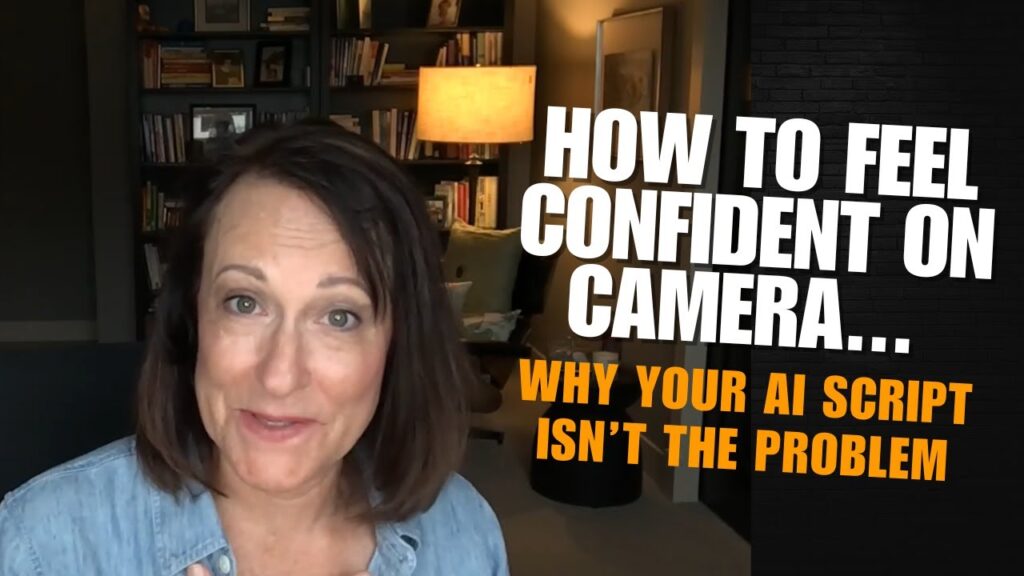
Watch the Video Where I Show You How to Feel Confident on Camera
Does Your AI Content Sound Generic?
Get Your Custom AI Voice Authority Playbook Done For You In Just 30 Minutes
Go from blah to brilliant with this single document any AI needs from you so that it can understand your voice, your audience, your offers and start creating content that is authentically you.